Trying to choose between the South Hills and North Hills? You are not alone. Many Pittsburgh-area buyers narrow their search to these two well-known regions, then realize each one includes a wide range of communities, price points, and lifestyles. If you want a clearer way to compare them, this guide will help you sort through commute patterns, home styles, town-center feel, park access, and real estate trends so you can focus on the suburb that fits your life best. Let’s dive in.
South Hills and North Hills are regions
One of the biggest points of confusion is that neither the South Hills nor the North Hills is a single neighborhood. They are broad regional labels made up of many separate municipalities, each with its own character, housing mix, and local identity.
SHACOG says it serves 23 municipalities, about 316,000 residents, and 223 square miles. NHCOG serves 21 municipalities, about 202,000 residents, and 194 square miles. In simple terms, that means you are not choosing between just two suburbs. You are choosing between two large suburban regions with very different options inside each one.
In the South Hills, examples include Bethel Park, Dormont, Mt. Lebanon, South Park, Upper St. Clair, and South Fayette. In the North Hills, examples include Ross, Hampton, McCandless, and Franklin Park. That matters because your day-to-day experience can change a lot from one municipality to the next.
Why many buyers lean South Hills
For many buyers, the South Hills stands out because it offers a mix of established neighborhoods, local business districts, and practical transit access. If you want a suburb that still feels connected to Pittsburgh, this part of the region often rises to the top.
Dormont and Mt. Lebanon are especially helpful examples. Dormont describes itself as the first independent municipality in the South Hills and notes that its growth accelerated after the streetcar tunnel and Liberty Tunnels. Mt. Lebanon also traces its development to streetcar access and has a modern town-center feel around Washington Road and Beverly Road.
That history still shapes how the South Hills feels today. Many communities have an older-suburb pattern with established streets, mature housing stock, and business districts that are part of everyday life rather than separated by long drives.
South Hills transit is a real advantage
If commute flexibility matters to you, the South Hills has a clear edge in one area: rail access. Pittsburgh Regional Transit says its light rail system extends 26.2 miles from the North Shore and Downtown through southern Pittsburgh neighborhoods and many South Hills suburbs.
Its accessible station list includes South Hills Junction, Mt. Lebanon, Castle Shannon, Overbrook Junction, Washington Junction, South Hills Village, and Library. That gives many South Hills residents a genuine alternative to driving for at least part of the workweek.
Dormont says the T runs through the middle of the borough and connects to Downtown and South Hills Village. Mt. Lebanon says the Washington Road district includes both bus and light-rail service, along with parking garages, surface lots, and meter parking. For relocating buyers and busy professionals, that can be a major quality-of-life win.
South Hills lifestyle often centers on town hubs
Another reason buyers are drawn to the South Hills is the mix of walkable business areas and established community amenities. In places like Dormont and Mt. Lebanon, local shops, restaurants, parks, and public spaces are part of the suburb’s rhythm.
Dormont highlights its pool, parks, library, and seasonal activities. Mt. Lebanon describes Beverly Road and Washington Road as walkable business districts with restaurants, transit access, and regular street-festival activity. If you want a suburb with a little more built-in neighborhood energy, the South Hills often delivers that feeling.
South Park adds another layer to the South Hills lifestyle. The county park includes more than 2,013 acres of parkland, which gives residents a major outdoor amenity close to home.
What makes the North Hills different
The North Hills appeals to many buyers for different reasons. If your ideal suburb includes a more spread-out layout, larger-lot feel, and highway-oriented commuting, the North Hills may line up better with your priorities.
County profiles place Ross, Hampton, McCandless, and Franklin Park roughly 7 to 15 miles north of Pittsburgh. PRT says its bus network covers more than 500 square miles throughout Allegheny County, but in day-to-day practice, North Hills commuting often depends more on driving and bus connections than on rail.
That difference shapes the overall feel. Compared with the more transit-linked inner South Hills, the North Hills can feel more auto-oriented and less tied to a rail corridor.
North Hills often offers bigger park access
If outdoor recreation is high on your list, the North Hills has a strong draw. North Park spans 3,089 acres across Hampton, McCandless, and Pine.
The park includes a 66-acre lake, boathouse, golf, trails, skating, a swimming pool, and the Latodami Nature Center. For buyers who want easy access to large-scale recreation and a more expansive suburban setting, that can be a strong selling point.
This is one of the clearest lifestyle tradeoffs between the two regions. The South Hills often wins on town-center character and rail access, while the North Hills often wins on larger park access and a more spread-out suburban feel.
Comparing home prices and housing feel
A common mistake is assuming one side of Pittsburgh is always more expensive than the other. The research does not support that. Both regions include a wide range of pricing, housing styles, and market conditions.
In the South Hills, Bethel Park’s April 2026 market page shows a median listing price of $284,900, a median sold price of $320,000, 101 homes for sale, and a median of 24 days on market. Mt. Lebanon shows a median listing price around $379,500 and is described as a balanced market. South Park shows a median listing price of $286,200 and a median of 29 days on market.
In the North Hills, Ross shows a median listing price of $277,497 and 28 days on market. McCandless shows a median listing price of $397,500, with 67 homes for sale and homes selling about 1.85% below asking. Franklin Park shows a median listing price of $685,000 and 26 days on market.
The bigger takeaway is this: the regional label alone does not tell you enough. Home age, lot size, municipality, and school district boundaries often shape value more than whether a home is in the South Hills or North Hills.
South Hills housing has a distinct identity
The South Hills often has an older-suburb feel that many buyers love. In places like Dormont and Mt. Lebanon, the housing pattern reflects early growth around trolley and streetcar lines, followed later by automobile-based suburban expansion.
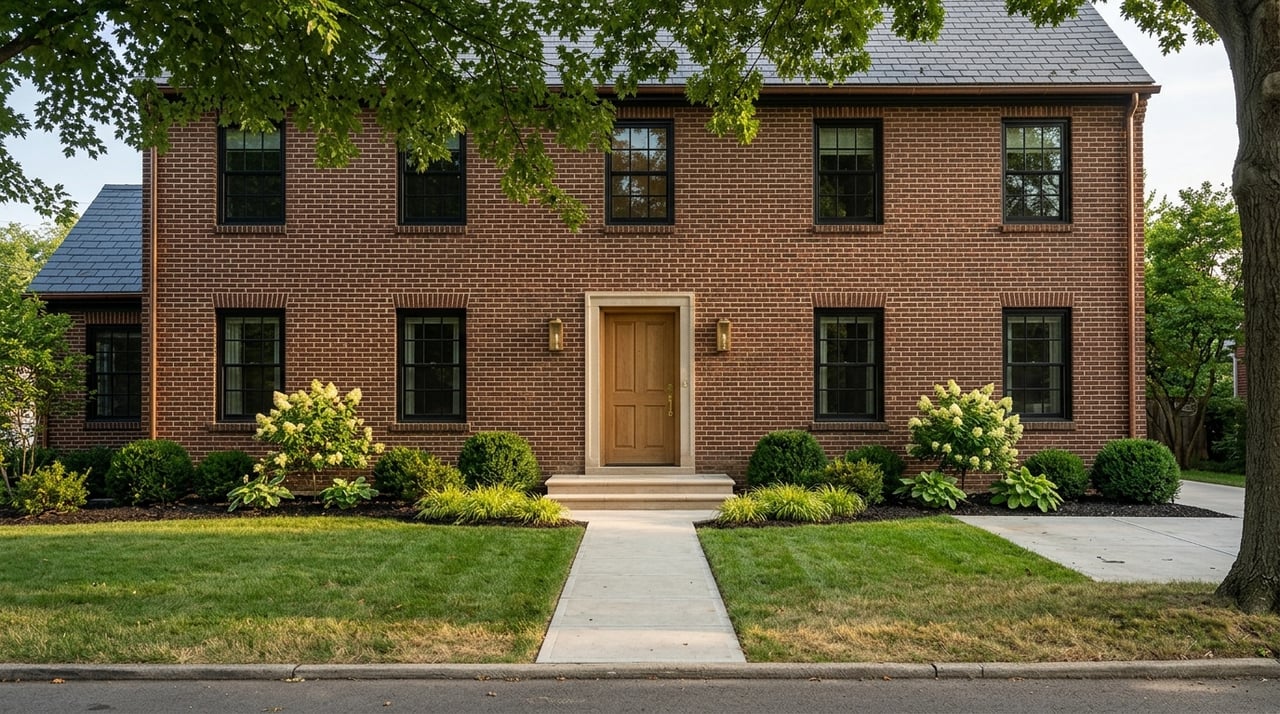
That history can show up in the streetscape, lot layout, and housing character. If you are drawn to established neighborhoods, classic brick homes, and communities with a long local story, the South Hills may feel especially compelling.
That does not mean every South Hills municipality looks the same. Bethel Park, South Park, Upper St. Clair, and South Fayette can offer very different experiences. Still, the region tends to share a stronger connection to historic suburban development and town-center life.
How to decide which area fits you
The best choice usually comes down to how you live. Instead of asking which side is better, ask which side supports your routine, commute, and long-term plans.
Here are a few practical ways to think through it:
Choose South Hills if you prioritize
- Light-rail access and more transit options
- Established town centers and business districts
- Older-suburb character and historic streetcar roots
- Easier connection to neighborhoods like Dormont and Mt. Lebanon
- A suburban feel that is often a bit more compact and connected
Choose North Hills if you prioritize
- A more spread-out suburban setting
- Commutes that work best by car and bus
- Proximity to large-scale recreation at North Park
- Communities where larger lots may play a bigger role in your search
- A suburban layout that feels less tied to a rail corridor
Do not treat school districts as a side note
When buyers compare South Hills and North Hills, school district boundaries often become one of the most important filters. They should be reviewed early, not after you have already fallen in love with a house.
In the South Hills sample set, options include Bethel Park, Mt. Lebanon, Upper St. Clair, and South Park. Dormont feeds into Keystone Oaks through its joint school arrangement. In the North Hills examples, districts include North Hills in Ross, Hampton, and North Allegheny in McCandless and Franklin Park.
The key is not to assume that regional labels line up neatly with district boundaries or housing options. They do not. A focused home search should compare municipality, district, commute route, and budget at the same time.
A smart way to narrow your search
If you are still unsure, start by touring both regions with a simple checklist. Pay attention to how each place feels when you drive through it, where you would run everyday errands, and how realistic the commute looks during the times you would actually travel.
You can also compare each area based on:
- Your target price range
- Your preferred home age and architectural style
- Whether rail access matters to you
- How important town-center walkability is
- Whether major park access is part of your weekly routine
- Which municipalities match your preferred school district boundaries
For many buyers, the answer becomes clear once they stop comparing broad labels and start comparing daily life. That is often where the South Hills begins to stand out, especially for buyers who want transit options, established neighborhoods, and strong community anchors.
If you are weighing the South Hills against the North Hills and want help narrowing the right fit, the Lauren Coulter & Dina Castillo Group can help you compare neighborhoods, understand local market differences, and move forward with confidence.
FAQs
What is the difference between South Hills and North Hills in Pittsburgh?
- South Hills and North Hills are broad regional labels, not single neighborhoods. In general, the South Hills is often known for light-rail access, established town centers, and older-suburb character, while the North Hills often offers a more spread-out suburban feel, highway-oriented commuting, and major park access.
Is the South Hills more transit-friendly than the North Hills?
- Yes, based on the research provided, the South Hills has a clearer rail advantage because Pittsburgh Regional Transit’s light rail system serves multiple South Hills communities and stations, while North Hills commuting more often leans on driving and bus connections.
Are South Hills homes more expensive than North Hills homes?
- Not necessarily. Both regions include a wide range of price points. For example, the research shows median listing prices from the high $200,000s in places like Bethel Park, South Park, and Ross to higher price points in communities like Mt. Lebanon, McCandless, and Franklin Park.
Which Pittsburgh suburbs are included in the South Hills?
- Examples from the research include Bethel Park, Dormont, Mt. Lebanon, South Park, Upper St. Clair, and South Fayette. These are part of a broader South Hills region served by SHACOG.
What makes South Hills appealing for homebuyers?
- The South Hills often appeals to buyers who want established communities, local business districts, access to the T, and neighborhood amenities like parks, libraries, restaurants, and community gathering spots.
How should you compare school districts in South Hills and North Hills?
- School district boundaries should be treated as a separate search filter from the start. The research shows that district lines vary by municipality, so it is important to compare location, district, budget, and commute together rather than relying only on a regional label.